What Is the Best Hosting for Multiple Podcast Shows?
You just had an idea for a second podcast. Maybe it’s an interview series to complement your solo show. Maybe it’s a seasonal deep-dive on a topic your main audience keeps asking about. Maybe you’re helping a friend launch their show and want to host it on your account.
Then you check your hosting platform’s pricing page.
On per-show platforms, that second podcast doubles your hosting costs. A third show? Triple. Before you’ve recorded a single episode of your new concept, you’re doing math homework instead of creative work. And here’s the thing: that math is based on pricing models designed when cloud storage cost 10x what it costs today.
According to Edison Research’s Infinite Dial 2024, 55% of Americans now listen to podcasts monthly, up from 47% in 2024. The podcast industry has matured into a legitimate media format. Creators are building podcast portfolios, not just single shows. Networks are forming. Production companies are managing client shows. Yet most hosting platforms still charge like it’s 2010.
This guide breaks down the three pricing philosophies for multi-show hosting, exposes the true cost differences across platforms, and argues that per-show pricing is an outdated model that penalizes exactly the kind of creative experimentation that pushes podcasting forward.
Quick Takeaways:
- Per-show pricing can cost 3-5x more than unlimited models for creators managing multiple podcasts
- 584 million podcast listeners projected for 2025, driving professionalization and multi-show strategies
- Show limits vary widely: some platforms charge per show, others cap by tier, others offer unlimited shows
- Portfolio creators (running multiple shows) represent podcasting’s innovative edge through format testing and audience segmentation
- Cloud infrastructure costs dropped 85%+ since 2010, making unlimited shows economically sustainable
The Rise of Portfolio Creators: Why Multiple Shows Matter
The solo podcaster recording in a closet isn’t the whole story anymore. DemandSage’s 2025 podcast statistics project 584 million podcast listeners globally this year, with the US podcast industry valued at $8.4 billion. That kind of audience and money attracts professionalization, and professionalization means diversification.
Why Podcasters Launch Multiple Shows
Think about how successful media brands operate. They don’t bet everything on a single format. They experiment. They segment audiences. They test concepts without betting the farm.
Podcasters are catching on. Here’s what multi-show strategies actually look like:
Audience segmentation: Your main show covers broad topics in your niche. Your second show goes deep on interviews with industry experts. Your third show is short daily news updates. Same overall audience, different content preferences served.
Format experimentation: You’re not sure if your audience wants a panel discussion format or a solo commentary format. Instead of guessing, you launch both as separate shows. The audience tells you which works.
Seasonal content: A 10-episode limited series exploring one topic deeply. When it’s done, it’s done. But on per-show platforms, you’re paying monthly for a “show” that stopped producing episodes months ago.
Brand building: Media companies and content creators build podcast networks under umbrella brands. Five related shows cross-promote to build a larger combined audience than any single show could reach.
The Portfolio Creator Mindset
Here’s the uncomfortable truth that per-show pricing platforms don’t want you to think about: the creators experimenting with multiple shows are exactly the creators pushing podcasting forward. They’re testing formats, serving niche audiences, and building the kind of diverse content libraries that keep listeners engaged.
Charging separately per show discourages this experimentation. It makes failure expensive. Kill a podcast idea that didn’t work? You were still paying for it every month. Launch a seasonal show? Pay year-round for something that only publishes three months a year.
The portfolio creator mindset treats shows as experiments, not lifelong commitments. Pricing models should support that, not punish it.
What Are the Three Pricing Philosophies for Multiple Shows?
Not all hosting platforms approach multi-show support the same way. Understanding the three pricing philosophies helps you predict your costs as you grow.
Per-Show Pricing: The Legacy Model
Per-show pricing charges you for each podcast you host, regardless of how many episodes or downloads that show generates.
Libsyn’s pricing page shows this approach: $7/month for 3 hours of storage on one show. Want to host two shows? You need two accounts, each with their own monthly fee. Three shows means three accounts. The math adds up fast.
Podbean’s pricing takes a hybrid approach: their base Unlimited Audio plan is $9/month, but adding additional public podcast channels costs an extra $9-29/month per channel depending on your plan tier.
Per-show pricing made sense in 2004 when Libsyn launched and storage was genuinely expensive. It doesn’t make sense in 2025 when storage costs have dropped 85%+ and the marginal cost of hosting an additional RSS feed is effectively zero.
Show-Limit Tiers: The Middle Ground
Some platforms don’t charge per show directly but limit how many shows you can host based on your pricing tier.
Buzzsprout’s pricing doesn’t explicitly cap shows, but their upload hour limits (4 hours for $19/month, 15 hours for $39/month) effectively constrain multi-show creators. Running two weekly 45-minute shows requires 6+ hours monthly, pushing you to higher tiers.
VNYL takes a tiered approach: 2 shows on Starter, 10 shows on Pro, 30 shows on Business. The show limit scales with the plan, but downloads and storage remain unlimited within each tier.
Show-limit tiers give you predictable costs without per-show multiplication. You know exactly what you’re paying regardless of whether you publish 1 episode or 100 across your shows.
Unlimited Shows: The Modern Standard
Unlimited show platforms let you host as many podcasts as you want on a single account. Your pricing is based on other factors (downloads, features, team size) rather than show count.
Transistor’s pricing offers unlimited podcasts on all plans. Their tiers are based on monthly downloads: $19/month for 20,000 downloads, $49/month for 100,000 downloads, $99/month for 250,000 downloads. Host 1 show or 50 shows, the pricing stays the same within your download tier.
Captivate’s pricing follows the same pattern: unlimited podcasts on all tiers, with pricing based on download limits (30,000 to 300,000 depending on plan).
The unlimited show model recognizes that the marginal cost of hosting additional RSS feeds is negligible. What matters is bandwidth and storage usage, not the arbitrary count of how many feeds you’re generating.
The True Cost of Per-Show Pricing: A Scenario Analysis
Let’s run the actual math on what you’d pay across different platforms as your podcast portfolio grows.
Scenario 1: Solo Creator Launching Second Show
You have a successful weekly podcast. You want to launch a monthly interview series as a second show. Combined downloads: 15,000/month.
| Platform | 1 Show Cost | 2 Shows Cost | Annual Difference |
|---|---|---|---|
| Transistor | $19/mo | $19/mo | $0 |
| Captivate | $17/mo | $17/mo | $0 |
| VNYL | $9/mo | $9/mo | $0 |
| Podbean | $9/mo | $18/mo | +$108/year |
| Libsyn | $15/mo | $30/mo | +$180/year |
On unlimited platforms, launching that second show costs you nothing extra. On per-show platforms, you’re paying $108-180 more per year for the privilege of experimenting with a new format.
Scenario 2: Production Company Managing 5 Client Shows
You run a small podcast production company. You manage 5 shows for clients. Combined downloads: 40,000/month.
| Platform | Monthly Cost | Annual Cost |
|---|---|---|
| Transistor | $49/mo (100K tier) | $588/year |
| Captivate | $44/mo (150K tier) | $528/year |
| VNYL Pro | $19/mo (10 shows) | $228/year |
| Podbean Network | $79/mo | $948/year |
| Libsyn (5 accounts) | $100/mo | $1,200/year |
The spread is dramatic. Managing 5 shows on Libsyn costs over 5x what it costs on VNYL. Even among “unlimited shows” platforms, the download-based tiers at Transistor and Captivate cost 2-3x more than flat-rate unlimited pricing.
Scenario 3: Podcast Network with 10 Shows
You’ve built a small podcast network. 10 related shows, combined downloads of 80,000/month.
| Platform | Monthly Cost | Annual Cost |
|---|---|---|
| Transistor | $49/mo (100K tier) | $588/year |
| Captivate | $44/mo (150K tier) | $528/year |
| VNYL Pro | $19/mo (10 shows) | $228/year |
| Podbean Network | $79/mo | $948/year |
| Libsyn (10 accounts) | $200/mo | $2,400/year |
At network scale, the per-show model becomes absurd. $2,400/year on Libsyn versus $228/year on VNYL for hosting the same content. That’s over $2,000 in annual savings that could go toward equipment, marketing, or actually making better podcasts.
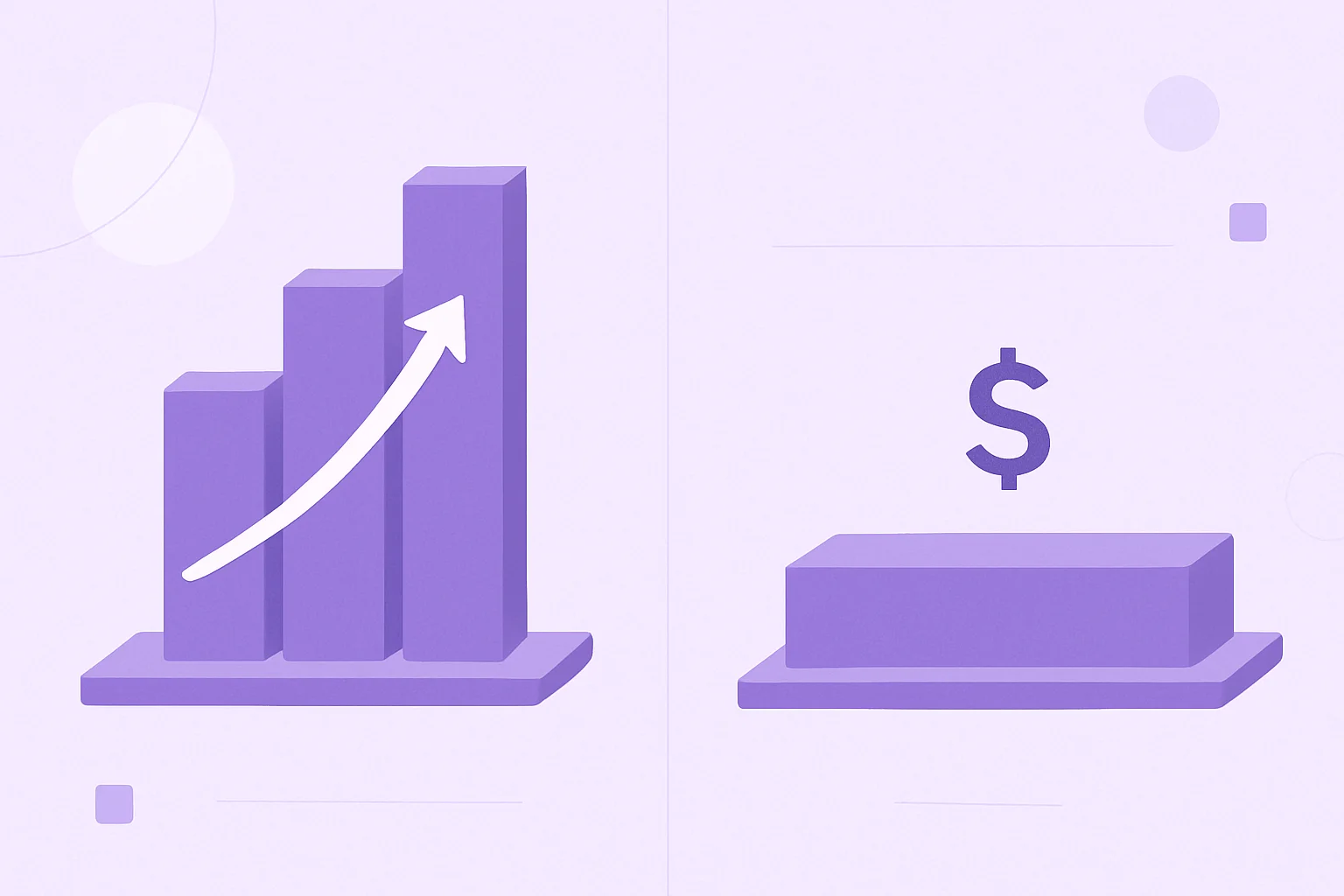
Quick Takeaway: Per-show pricing multiplies your costs linearly with show count. Unlimited platforms keep costs flat regardless of how many shows you manage.
Why Does Per-Show Pricing Penalize Innovation?
The economics of per-show pricing create perverse incentives that work against creative experimentation.
Experimentation Becomes Financially Risky
You have an idea for a new podcast format. You’re not sure if it will work. On a per-show platform, testing that idea costs you an additional $7-20/month from day one, before you’ve published a single episode, before you know if the concept resonates.
That financial risk discourages experimentation. Creators stick with their existing show because launching something new is expensive. The industry loses the creative exploration that comes from low-risk format testing.
On unlimited platforms, testing costs nothing extra. Launch it, see if it works, kill it if it doesn’t. No monthly penalty for trying something new.
Seasonal Shows Require Year-Round Costs
Seasonal podcasts are a growing format. A 10-episode deep dive into a specific topic, released over 3 months, then done until the next season.
On per-show platforms, you’re paying for that show year-round. The 9 months you’re not publishing? Still paying. The “off-season” costs as much as the production season.
You could cancel and relaunch, but that risks losing your established RSS feed, your subscriber base, your download history. So you keep paying for a dormant show.
Cross-Promotion Potential Lost to Fragmentation
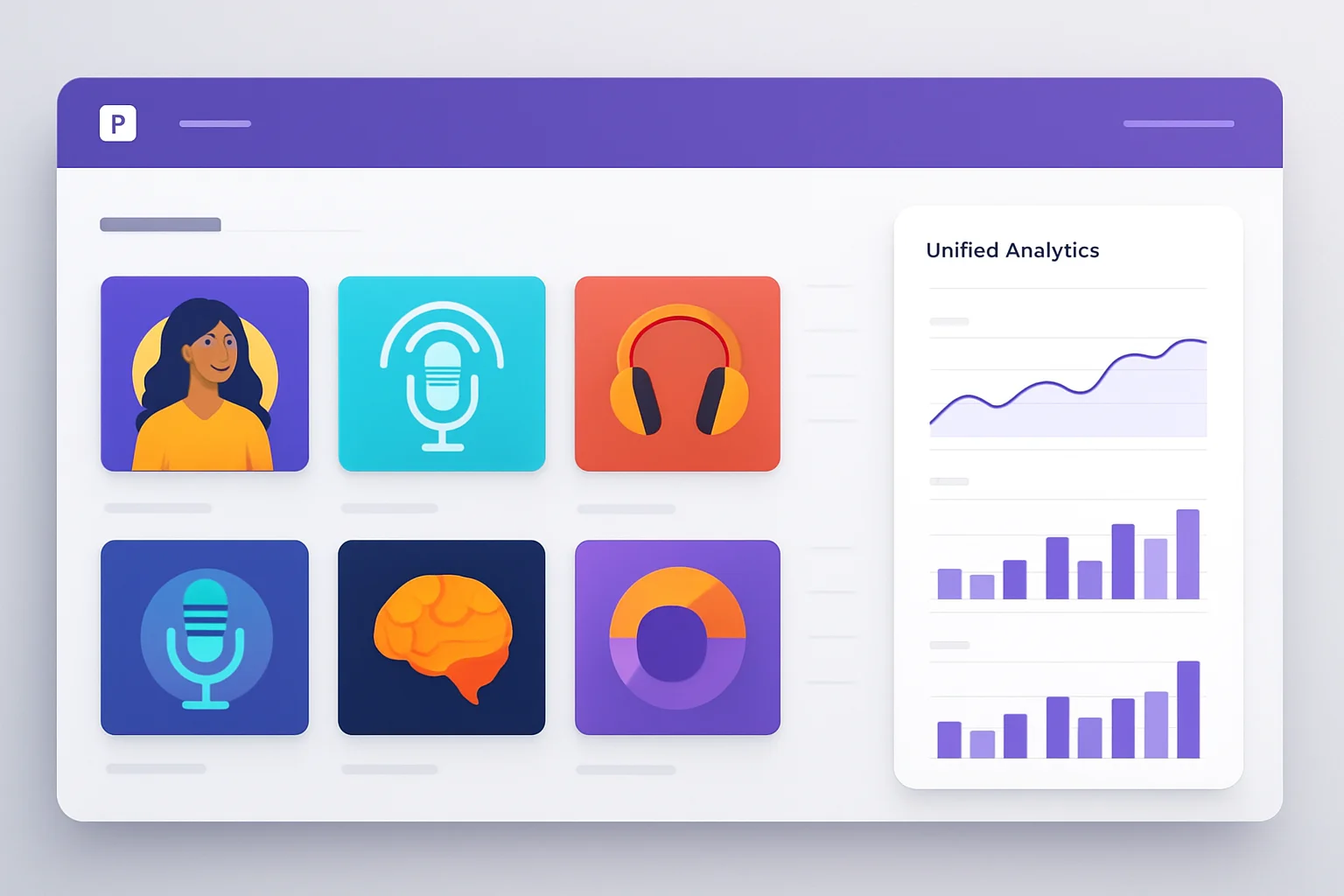
When shows live on separate accounts (because per-show pricing forces multiple accounts), you lose network effects. Separate analytics. Separate dashboards. Separate billing. No unified view of your podcast portfolio.
Cross-promotion between shows becomes harder when you can’t see combined analytics. You can’t easily identify which of your shows shares audience overlap, which episodes drive subscribers between shows, or how your network performs as a whole.
The “Zombie Show” Problem
Per-show pricing creates zombie shows: podcasts that stopped producing new content months or years ago but remain active because canceling them means losing the RSS feed, the download history, and the subscriber base.
You keep paying monthly for shows that aren’t producing anything. Not because you want to, but because the cost of truly shutting down (lost feed, lost history) outweighs the monthly fee.
On unlimited platforms, zombie shows cost you nothing extra. Keep them archived. Maybe you’ll revive them someday. No financial pressure to make that decision right now.
Network Management Features That Actually Matter
Beyond show limits and pricing, multi-show creators need specific features that many platforms don’t offer. Here’s what separates real network support from platforms that just allow multiple RSS feeds.
Unified Dashboard Across All Shows
Managing 5 shows shouldn’t require 5 browser tabs and 5 separate logins. A unified dashboard lets you see all your shows in one place, switch between them easily, and get an overview of your entire portfolio’s performance.
Not all “unlimited shows” platforms actually provide unified management. Some just let you create multiple separate accounts under one billing relationship. That’s not the same as integrated multi-show management.
Network-Level Analytics
Individual show analytics are useful. Network-level analytics are transformative.
What’s your combined reach across all shows? Which shows share audience? When listeners subscribe to one show, how often do they subscribe to others? Which episodes drive cross-show subscription?
These questions require analytics that aggregate across your portfolio, not just individual show stats. For more on team collaboration features across your shows, our dedicated guide covers permission systems and workflow management.
Centralized Team Management
Production companies need team members with access to some shows but not others. An editor working on Show A shouldn’t necessarily have access to Show B’s content.
Real multi-show support includes per-show permission settings. Add your editor to specific shows, not your entire account. Give your marketing person analytics access without publishing permissions.
Shared Asset Libraries
Intro music, ad spots, standard outros. These assets get used across multiple shows. Platforms with shared libraries let you upload once and use everywhere instead of duplicating files across each show.
Cross-Show Promotion Tools
Dynamic content insertion that promotes Show B on Show A. Trailer swaps between shows. Network-wide announcements that appear on all feeds simultaneously.
These features turn a collection of individual shows into an actual network with cross-promotion capabilities. Without them, you’re just hosting multiple independent podcasts that happen to share a billing account.
When Do Unlimited Shows Actually Matter?
Honest assessment: not everyone needs unlimited show support. Here’s when it matters and when it doesn’t.
You Need Multi-Show Support If:
You’re planning a second show within 12 months. Even if you haven’t launched it yet, choosing a platform that penalizes multi-show growth means migration later.
You run seasonal or limited series content. Shows that don’t publish year-round shouldn’t cost you year-round.
You manage shows for others. Production companies, agencies, or anyone hosting client podcasts needs multi-show support without cost multiplication.
You want to experiment with formats. Testing new concepts without financial penalty requires platforms that don’t charge per show.
You’re building a network. Even a small network of 3-5 related shows needs unified management and cross-show analytics.
You Might Not Need Multi-Show Support If:
You’re committed to a single show forever. If you’re genuinely certain you’ll never launch a second podcast, per-show pricing won’t penalize you.
Your show is a side project with no growth plans. A hobby podcast with no monetization or growth goals might not need the features that multi-show platforms provide.
But here’s the thing: most creators eventually want to launch something new. The podcaster who’s “committed to one show forever” often discovers a new topic, a new format, or a new opportunity that justifies a second show. Choosing a platform that penalizes that future growth is borrowing against tomorrow.
How Do the Major Platforms Handle Multiple Shows?
Let’s compare the specific multi-show features and limitations across major hosting platforms.
Transistor: Unlimited Shows, Download-Based Pricing
Transistor offers unlimited podcasts on all plans. Pricing is based on monthly downloads: $19 for 20,000, $49 for 100,000, $99 for 250,000, $199+ for enterprise.
Multi-show features:
- Unlimited shows on single account
- Unified dashboard with show switching
- Per-show analytics and network-level overview
- Team members with per-show permissions
- Private podcast support (subscriber limits vary by tier)
Limitations:
- Download caps mean viral episodes can push you to higher tiers mid-month
- At $49-99/month for moderate download counts, not the cheapest option
- Network-level analytics less robust than some competitors
Captivate: Unlimited Shows, Growth-Focused Features
Captivate emphasizes podcast growth with attribution tracking and marketing tools. Unlimited shows on all tiers with download-based pricing: $17 for 30,000, $44 for 150,000, $90 for 300,000 (annual pricing).
Multi-show features:
- Unlimited podcasts on all plans
- IAB-certified analytics across all shows
- Network features for multi-show management
- Team access included on all plans
Limitations:
- Download caps still create tier jump anxiety
- Lower download limits than Transistor at equivalent price points
- Marketing-heavy features may be overkill for simple hosting needs
Buzzsprout: Upload Limits, Implicit Show Constraints
Buzzsprout charges based on upload hours rather than downloads: $19 for 4 hours/month, $39 for 15 hours, $79 for 35 hours.
Multi-show approach:
- No explicit show limit
- Upload hours shared across all shows
- Unlimited team members on all plans
Limitations:
- Upload hour model implicitly constrains multi-show creators
- Two weekly 45-minute shows need 6+ hours/month, requiring $39+ plan
- Episodes older than 90 days archived unless upgraded
Podbean: Per-Channel Add-On Pricing
Podbean offers a base Unlimited Audio plan at $9/month with additional channels costing extra.
Multi-show approach:
- Base plan includes 1 public podcast channel
- Additional public channels: $9-29/month each depending on base plan
- Network plan ($79/month) includes unlimited channels
Limitations:
- Per-channel pricing penalizes multi-show growth on lower tiers
- Need Network tier ($79/month) for true unlimited shows
- 50 team member limit even on Network plan
Libsyn: Per-Show Model, Legacy Approach
Libsyn uses storage-based pricing with per-show accounts: $7 for 3 hours, $15 for 6 hours, $20 for 10 hours.
Multi-show approach:
- Each show requires its own account and subscription
- No unified multi-show management
- Network features require enterprise plans
Limitations:
- True per-show pricing multiplies costs linearly
- No unified dashboard for multiple shows
- Storage-based model feels outdated in 2025
VNYL: Show Tiers with Unlimited Downloads
VNYL offers tiered show limits with unlimited downloads: Starter (2 shows) at $9/month, Pro (10 shows) at $19/month, Business (30 shows) at $39/month.
Multi-show features:
- Show limits scale by tier without download caps
- Unified dashboard across all shows
- Network-level analytics
- Unlimited team members on all plans
- Unlimited downloads regardless of show count
Limitations:
- Show limits (not truly unlimited like Transistor)
- Newer platform with less brand recognition
- Some features still in development
For a complete breakdown of all features, see our podcast hosting platform comparison guide.
| Platform | Shows Included | Multi-Show Cost | Download/Storage Model | Team Members |
|---|---|---|---|---|
| Transistor | Unlimited | Included | 20K-250K downloads | Unlimited |
| Captivate | Unlimited | Included | 30K-300K downloads | Unlimited |
| VNYL | 2-30 by tier | Included | Unlimited downloads | Unlimited |
| Buzzsprout | Unlimited* | Included | 4-35 upload hrs/mo | Unlimited |
| Podbean | 1 (+$9-29/ea) | Per channel | Unlimited storage | 50 max |
| Libsyn | 1 per account | Per account | 3-55 hrs storage/mo | Limited |
*Buzzsprout’s upload hour limits effectively constrain multi-show creators
VNYL’s Multi-Show Philosophy
When we built VNYL, we asked a simple question: what would podcast hosting look like if we designed it for how creators actually work in 2025?
The answer included multi-show support from day one. Not as a premium add-on. Not locked behind enterprise pricing. Built into the core product because portfolio creators are the future of podcasting.
Why Show Tiers Instead of Truly Unlimited
We chose show tiers (2/10/30) over unlimited for a practical reason: it keeps pricing predictable for everyone. Unlimited show platforms often compensate with download caps that create surprise tier jumps. We’d rather be upfront about show limits and give you unlimited downloads without bandwidth anxiety.
For most creators, 2-10 shows is plenty. For production companies and networks, 30 shows covers significant operations. If you need more than 30, we’ll talk about enterprise options.
Unified Dashboard and Network Analytics
Every VNYL account sees all shows in one dashboard. Switch between shows with a click. View combined analytics across your portfolio. Understand how your network performs as a whole, not just individual show metrics.
Team Permissions Across Shows
Add team members with account-wide or per-show access. Your editor gets access to the shows they work on. Your marketing person sees analytics without publishing permissions. Your billing admin doesn’t need content access.
The Economics That Make It Work
Cloud storage costs roughly $0.023/GB in 2025. Bandwidth costs pennies per gigabyte. The infrastructure cost of hosting an additional RSS feed is effectively zero. Charging per-show is artificial scarcity, not cost recovery.
We pass those infrastructure savings to creators instead of maximizing margins. Founder pricing at $9/month for unlimited downloads and 2 shows isn’t a loss leader. It’s sustainable pricing based on 2025 infrastructure costs, not 2010 assumptions.
(This is exactly why we built multi-show support standard. Portfolio creators shouldn’t subsidize outdated pricing models.)
Making the Multi-Show Decision
Per-show pricing is a legacy model from when storage was expensive. The infrastructure economics that justified it in 2004 don’t exist anymore. Platforms still charging per show are capturing profit margin, not covering costs.
Here’s the decision framework:
If you’re running a single show with no plans to expand, per-show pricing won’t hurt you today. But most creators eventually launch something new. Choosing a platform that penalizes future growth is betting against your own success.
If you’re managing or planning multiple shows, per-show pricing becomes a significant annual cost. The $100-2,000+ annual savings from unlimited platforms compounds over time.
If you’re building a network, per-show pricing is unworkable at scale. You need unified management, network analytics, and pricing that doesn’t multiply with every new show.
The podcast industry has matured. Creators are building portfolios, not just single shows. Hosting platforms should support that evolution, not tax it.
Unlimited shows should be the standard, not the exception. The platforms that figure this out will win the next generation of podcast creators. The platforms still charging per-show will eventually wonder where all their customers went.
For creators who want to schedule episodes across multiple podcasts efficiently, workflow tools become essential as your portfolio grows.
Ready to manage multiple podcasts without per-show penalties? VNYL’s Pro plan includes 10 shows with unlimited downloads at $19/month. That’s network hosting that doesn’t punish success.
Compare your multi-show hosting costs with our free calculator to see what you’d pay across platforms at your current and projected show count.
Want more podcasting strategy tips? Join our newsletter at vnyl.fm for weekly insights on building and growing podcast portfolios.